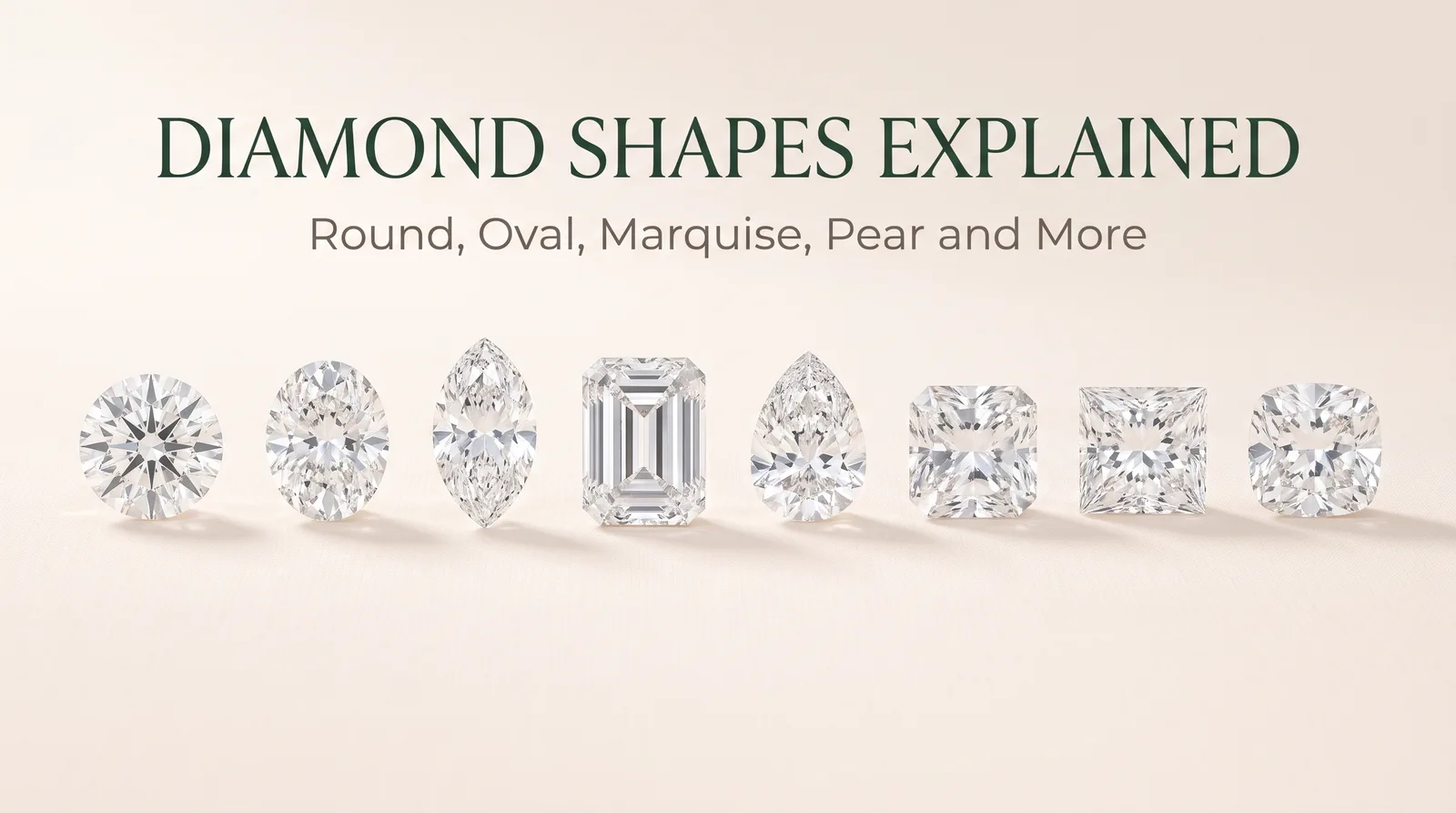
Diamond Shapes Explained: How to Choose Between Round, Oval, Marquise, Pear and More
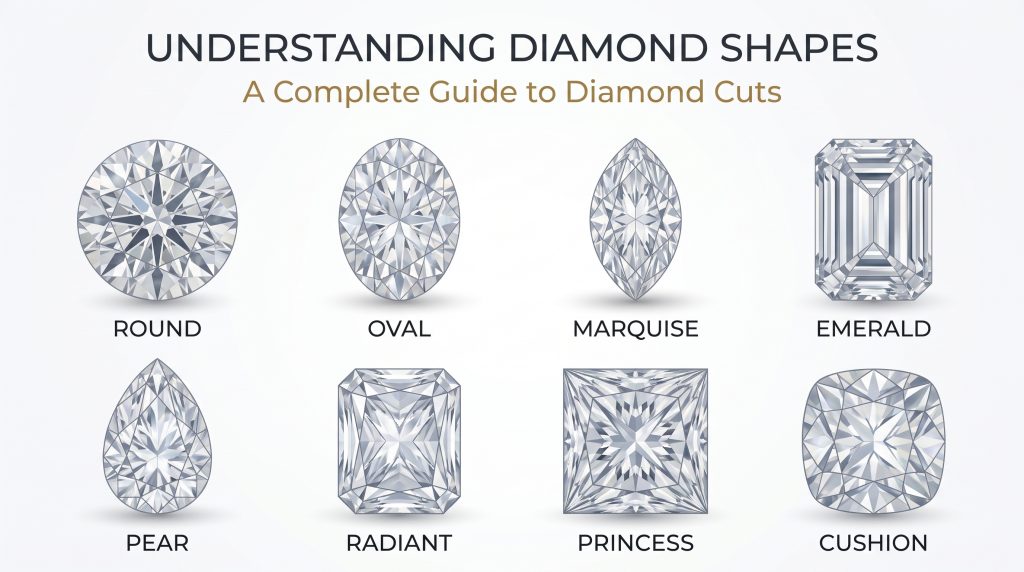
Walk into any jewelry store, or scroll any jewelry website, and the first choice is never the metal. It is the shape. The outline of a diamond shapes how a ring looks on the hand, how large the stone appears, how much light it throws back, and how it should be set. Here is a plain-language guide to the eight most popular diamond shapes, so you can choose the one that fits your style.
Shape vs. Cut: A Quick Distinction
Shape is the outline of the stone, such as round, oval or pear. Cut is about proportions and polish, and it is what determines how brilliant a diamond looks. A well-cut oval can outshine a poorly cut round. So pick the shape you love first, then look for a diamond that is well cut within that shape. Every diamond at Lioralove is IGI certified, so you can check the grading report for each stone.
The 8 Diamond Shapes, Compared
Round
The round brilliant is the most popular shape and the most researched. Its 57 or 58 facets are arranged to return as much light as possible, so it hides small flaws well and sparkles from every angle. Because so much rough diamond is lost in cutting it, round stones usually cost the most per carat.
Best for: a classic look that never goes out of style, and the maximum sparkle.
Keep in mind: It suits almost every setting, but it looks smaller than elongated shapes of the same carat weight.
Oval
The oval is essentially a stretched round brilliant, so it keeps much of the sparkle. Its elongated outline makes the stone look larger than a round of the same carat weight and gives the hand a slimmer, longer line. It usually costs less per carat than a round.
Best for: a modern, elegant look that elongates the finger.
Keep in mind: Look for a length-to-width ratio of about 1.30 to 1.50. Many ovals show a darker “bow-tie” across the center, so check how pronounced it is.
Marquise
The marquise is a long boat shape with two pointed ends. For its carat weight it has the largest surface area of all the shapes, so it looks big, and it stretches the finger. Our 2ct Marquise Diamond Ring shows how dramatic this shape is in 18k gold.
Best for: a bold, vintage-inspired statement with the most finger coverage.
Keep in mind: The two points are the most exposed part of the stone, so protective prongs matter. A ratio of about 1.75 to 2.15 usually looks balanced, and a faint bow-tie is normal.
Emerald
The emerald cut is a rectangle with trimmed corners and long, step-like facets. Instead of fiery sparkle it gives flashes of light, often described as a hall of mirrors. It is a refined, understated choice.
Best for: a sleek, art-deco look with a quiet kind of luxury.
Keep in mind: The large open facets show inclusions more easily, so choose a higher clarity grade. A ratio of about 1.30 to 1.50 is the classic proportion.
Pear
The pear combines the round and the marquise: one rounded end and one point, like a teardrop. It sparkles well, flatters the finger, and also makes beautiful pendants and drop earrings. See it in our 0.30ct Pear Diamond Ring and our Pear & Marquise Diamond Drop Earrings.
Best for: a feminine, one-of-a-kind outline that is round on one end and pointed on the other.
Keep in mind: Wear a ring with the point toward the fingertip. Like the marquise it can show a bow-tie, and the point needs a prong to protect it. A ratio of about 1.50 to 1.75 is the most popular.
Radiant
The radiant has a rectangular or square outline with trimmed corners, like an emerald, but is cut with brilliant-style facets like a round. The result is strong fire and sparkle in a shape that feels contemporary. It is also a sturdy choice for everyday wear.
Best for: people who love the rectangular outline of an emerald but want more sparkle.
Keep in mind: The faceting is busy, so it hides small inclusions better than an emerald cut does, but it can look slightly warmer in color, so pay attention to the color grade.
Princess
The princess is a square with sharp corners and brilliant faceting, and it is the most popular fancy shape. It gives plenty of sparkle with a crisp, modern outline. It also works well as a pair of stud earrings, such as our 2ct Princess Cut Diamond Stud Earrings.
Best for: a clean, geometric look with a lot of brilliance.
Keep in mind: The four corners are the weak spots and can chip, so choose a setting with prongs or a bezel that covers them.
Cushion
The cushion is a square or slightly rectangular stone with rounded corners, like a pillow. It has an antique feel and a soft, romantic glow, and it is comfortable to wear because it has no sharp points.
Best for: a romantic, soft look with a touch of vintage charm.
Keep in mind: Cushion cuts vary a lot in their facet patterns, so compare stones individually and look at them in real light, not only in photos.
At a Glance
| Shape | Sparkle | Looks larger? | Style |
|---|---|---|---|
| Round | Highest | Average | Classic |
| Oval | High | Yes | Modern, elegant |
| Marquise | Medium-high | Yes, the most | Bold, vintage |
| Emerald | Elegant flashes | Average | Art deco, understated |
| Pear | High | Yes | Feminine, distinctive |
| Radiant | High | Average | Contemporary |
| Princess | High | Average | Crisp, geometric |
| Cushion | Medium-high | Average | Romantic, vintage |
How to Choose Your Shape
Start with your lifestyle and your hand. If you want the most sparkle and a timeless look, choose round. If you want the stone to look larger for your budget, look at oval, marquise or pear. If you prefer a quieter, more architectural style, try emerald or radiant. If you work with your hands a lot, rounded outlines like round, oval and cushion are the easiest to live with, while pointed corners need good prongs.
Whichever shape you choose, always ask for the certificate, look at the stone in natural light if you can, and compare cut quality, not just carat weight. Browse our fine jewelry collection to see these shapes set in solid 14k and 18k gold, and contact us if you would like help choosing.